Rainboots: A Designer’s Review for Small Business Merchandise
First Impression: Professional Playfulness for Branded Goods
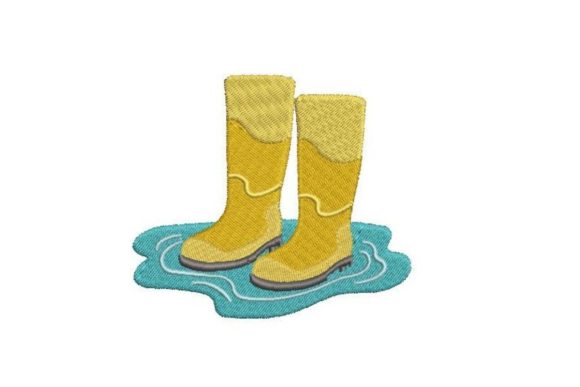
When evaluating an embroidery design like Rainboots for business use, the first question is always about personality. Rainboots suggests a playful, approachable, and outdoorsy character. For a boutique, café, creative studio, or any business wanting to convey a friendly and active brand identity, this is a strong starting point. The description notes it will stitch out beautifully, which implies clean lines and good composition—a hallmark of a professional-grade digital embroidery file. This isn’t just a decorative motif; it’s a design asset ready to become part of your product.
Real Business Applications: From Patches to Product Labels
Imagine a local bakery giving embroidered aprons as staff uniforms, a florist offering branded tote bags, or a pet brand creating custom patches for leashes. Rainboots can anchor these items beautifully. As a chest logo accent on a work shirt, it provides a recognizable mark without being overly dominant. Its style makes it ideal for custom apparel meant for customer engagement: think event merch for a community fair or gifts for loyal clients.
For embroidered patches, Rainboots offers excellent versatility. A patch can be applied to denim jackets, backpacks, or even as a product packaging accent for a handmade shop. As a cap embroidery design, it needs to be evaluated for size, but its likely bold outline would ensure visibility. For apron embroidery, especially for a café or garden center, it directly reinforces a thematic, hands-on brand image.
Where Rainboots Excels in Merchandising
- Tote Bag Design: A single, well-stitched Rainboots on a canvas tote creates a premium, reusable merchandise item.
- Uniform Sleeve Detail: A smaller version on a sleeve adds a subtle branded touch for staff.
- Product Label Add-On: On the corner of a tea towel or a set of napkins for a boutique, it elevates a handmade product.
- Printable Mockup Asset: Before stitching, the design file can be used in digital mockups for client approval or online store listings.
Practical Considerations for Commercial Embroidery
Every experienced embroidery designer knows that a beautiful preview doesn’t guarantee a perfect stitch-out. For Rainboots to perform reliably in small business merch production, several steps are crucial.
First, test it in black and white first. Stitching the design in a single color on both light and dark fabric scraps reveals the true outline and density, separate from the allure of thread colors. This is essential for understanding how it will look on dark uniforms or light aprons.
Second, check if it works at small patch size. Many businesses want a small logo for a cap front or a delicate product label. You must stitch a sample at the intended minimum size to see if details remain clear and if the stitch density becomes too high for fine fabrics.
Key Designer Notes Before Production
- Always review thread color contrast against your target fabric. A playful design can disappear if colors blend.
- Inspect spacing and overlaps in the embroidery file itself to prevent thread breaks.
- Confirm hoop size requirements. While the description mentions multiple embroidery file formats, you must verify the minimum hoop needed for a clean stitch-out on your specific item.
- Test on real fabric that matches your final product—the texture of canvas for a tote versus twill for a cap changes everything.
- Use the proper stabilizer for the fabric texture to prevent puckering, especially on items like aprons that need frequent washing.
- Create a mockup for client approval if you’re producing for another business. Visual alignment prevents misunderstandings.
- Compare it beside other design assets to ensure visual consistency across your brand’s merchandise.
- Confirm commercial licensing before business use. The product description states it can be used with, but you must explicitly verify the license covers commercial embroidery for the items you intend to produce and sell.
Navigating Potential Challenges
Rainboots, like any design, has areas for careful application. On curved surfaces like caps, the design might need slight adjustment to avoid distortion. If the design contains tiny lettering (like a brand name integrated into it), test that element separately at small sizes. High stitch density areas, if present, could be tough on lightweight fabrics and require careful stabilizer choice.
For items destined for frequent washing—staff uniforms, aprons, reusable tote bags—a robust stitch structure is key. Testing the washed sample is a non-negotiable step to ensure the embroidered patch or logo retains its integrity and doesn’t fray, protecting your brand’s professional presentation.
The Impact on Brand Identity and Customer Trust
Ultimately, using Rainboots on your merchandise isn’t just about adding a picture. It’s about weaving a visual story into your products. A well-executed embroidery design on a staff apron signals attention to detail and professionalism. On a tote bag sold by a boutique, it increases the perceived product value and creates a tangible connection with the buyer.
Consistent use across different items—patches, uniforms, caps—builds strong customer recognition. When a customer sees the same Rainboots design on your café’s apron, your market stall’s banner, and your event giveaway, it reinforces trust and brand memory. For an Etsy seller or craft business, it turns a generic item into a handmade presentation with a unique signature, directly boosting buyer engagement.
In the category of Accessories and the type of Embroidery, Rainboots sits as a versatile tool. It’s more than an accessory design; it’s a brand accessory. By following a meticulous testing and application process, this machine embroidery design can become a reliable, profit-driving part of your small business merch strategy, helping your brand leave a lasting, stylish impression.