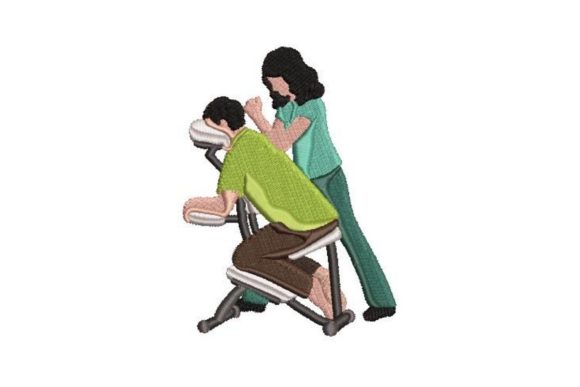
A Professional Review of the Masseur Giving Seated Massage Embroidery Design
First Impressions: A Design with Quiet Character
When you first open the Masseur Giving Seated Massage embroidery file, its mood is immediately clear. This isn’t a loud, decorative piece; it’s a functional, illustrative design with a quiet personality. The level of detail is thoughtful, focusing on the essential shapes of the figure and the chair, relying on clean outlines and fill areas to convey the scene. For embroidery designers looking for a design that speaks to service, care, or a professional touch, this fits naturally. Its decorative appeal is subtle—it won’t dominate a garment but will add a meaningful personal touch, exactly as the product description suggests. My immediate thought was that this would be perfect for projects where the imagery needs to communicate an idea directly, rather than just adorn.
Where This Design Finds Its Natural Home
In real embroidery work, the Masseur Giving Seated Massage design has a specific niche. It naturally fits into projects for custom apparel in the wellness or service industries—think therapist uniforms, spa lounge wear, or even gym staff shirts. Beyond uniforms, its thematic clarity makes it a strong candidate for handmade gifts for massage professionals, like personalized aprons, tote bags, or pillow covers. For Etsy sellers or craft fair vendors focusing on niche markets, this design could anchor a whole line of products for massage students or practitioners. It also translates well into a sturdy embroidered patch, which could be applied to bags or hats. In my planning, I considered it for a custom order of therapist thank-you gifts: a set of embroidered kitchen towels and a tote bag. The design’s straightforward nature makes it excellent for product photography and printable mockups, as the image is easy for potential customers to understand instantly.
Practical Performance on Real Fabrics and Products
Embroidery is not just about the digital file; it’s about how it stitches out. For a design like Masseur Giving Seated Massage, with its defined shapes and likely areas of satin stitch and fill stitch, practical use requires careful consideration. On textured or stretchy fabric like sweatshirts, using the proper stabilizer is paramount to prevent distortion of the figure. If the design contains small details, like tiny lettering or intricate hands, stitch density and hoop size become critical. I would always advise testing on scrap fabric first, especially if stitching on dark fabric where thread color contrast needs to be bold to maintain clarity.
For curved surfaces like caps, the design’s composition would need to be evaluated—larger, centralized elements tend to work better. Items destined for frequent washing, like baby blankets or kitchen towels, require a robust stitch structure to endure. The product description notes it comes with multiple embroidery file formats, which is a significant advantage for machine compatibility. However, as a professional, I never assume. Before any commercial project, I meticulously confirm the available file formats, the exact hoop size requirements, and the licensing terms on the Creative Fabrica product page. This step is non-negotiable for selling finished items.
Adding Value and Building Trust with Your Embroidery
Using a well-executed design like Masseur Giving Seated Massage can directly affect your product’s value and customer trust. For a handmade product, a clean, recognizable embroidery design enhances the presentation, making it look intentional and professional. It strengthens brand consistency for a small business selling wellness-themed goods. The visual appeal is specific and meaningful, which increases the giftability of an item—a customer purchasing an embroidered tote bag with this design knows exactly the sentiment they are conveying.
In commercial embroidery for uniforms or boutique merchandise, a design that stitches out cleanly and reliably builds immense buyer trust. Clients expect durability and clarity. This design, by being illustrative rather than overly ornate, minimizes the risk of small stitch elements fraying or becoming lost, which in turn protects your reputation as a decorator. When a design performs consistently across different items—from a sweatshirt to an apron—it streamlines your production and boosts customer engagement, as the final product communicates its purpose without ambiguity.
Essential Embroidery Notes Before You Stitch
Before committing this design to a customer’s project, my workflow involves several key checks. First, test on scrap fabric identical to the final product material. This reveals how the stitch density interacts with the fabric and whether small details hold up. Second, review thread color contrast by creating simple light and dark fabric mockups digitally or mentally; a design with mid-tones might need adjustment for a black shirt. Third, always use proper stabilizer; even a seemingly simple design can puckered on unstable ground.
Finally, after the test stitch, inspect small details after stitching. Look for any jump stitches that might snag, or fill stitch areas that might be too dense for the chosen fabric. These steps ensure that the Masseur Giving Seated Massage design you download from Creative Fabrica becomes a reliable, quality asset in your embroidery toolkit, rather than a source of last-minute production issues. Remember, the product description is your starting point, but your professional verification is what guarantees a successful finished product.
Final Thoughts for the Creative Entrepreneur
The Masseur Giving Seated Massage machine embroidery design is a focused tool. It won’t suit every project, but for its intended niche—adding a professional, personal touch to work-related items or thematic gifts—it has clear potential. Its value lies in its straightforward communication. For embroidery designers, Etsy sellers, and apparel decorators serving specific communities, this kind of design can fill a precise need in your catalog. My advice is to evaluate it against your upcoming orders. Does it fit a client’s request? Could it enhance a product line for a craft fair? If so, with the practical precautions of testing and checking file details, it can become a trustworthy part of your commercial or handmade offerings. Its success, as with any digital embroidery file, ultimately depends on your skill in applying it thoughtfully to the right project.